Nylon webbing is a high-performance narrow woven textile used in applications where strength, flexibility, abrasion resistance and durability are important.
From backpacks and luggage to industrial products, military equipment, pet products, safety equipment and outdoor gear, nylon webbing is used in a wide variety of products.
The combination of high strength, flexibility, toughness and abrasion resistance makes nylon particularly useful for applications that experience repeated movement, pulling, bending or impact.
However, not all nylon webbing is the same.
The final performance depends on factors such as the nylon yarn, yarn construction, weave, width, thickness, density, finishing and manufacturing process.
D I PLAST INDIA manufactures and supplies nylon webbing for applications including bags, luggage, safety equipment, military gear, pet accessories, outdoor products, automotive applications and industrial products.
In this guide, we will explain what nylon webbing is, how it is manufactured, where it is used, how it compares with polyester webbing and what buyers should consider when selecting a nylon webbing manufacturer.
Nylon webbing is a narrow woven fabric manufactured from nylon yarn.
Instead of being produced as a wide textile fabric, webbing is manufactured in controlled narrow widths for use as:
Straps
Belts
Handles
Harnesses
Reinforcement
Load-bearing components
Attachment straps
Safety products
Outdoor equipment
Nylon is particularly useful where the finished product needs a combination of strength and flexibility.
The webbing can be manufactured in different:
Widths
Thicknesses
Colors
Weave constructions
Strength levels
Finishes
This allows manufacturers to select a webbing specification according to the final application.
Nylon has several properties that make it suitable for narrow woven products.
Nylon can provide high tensile strength relative to its weight.
This makes it useful for products that need to withstand repeated pulling and loading.
Nylon webbing can have a relatively flexible hand and can bend around hardware, loops and curved surfaces.
This is particularly useful for:
Backpack straps
Harnesses
Pet collars
Outdoor equipment
Military equipment
Webbing is often exposed to repeated rubbing.
Nylon is known for good abrasion resistance, making it suitable for products that experience frequent movement and contact.
Nylon can absorb energy under load and is valued for toughness in many applications.
Nylon can provide a useful strength-to-weight ratio, allowing manufacturers to design strong products without unnecessarily increasing weight.
D I PLAST INDIA describes its nylon webbing as offering high tensile strength, abrasion resistance, flexibility and long service life.
Nylon webbing is available in different constructions depending on the application.
Flat nylon webbing is one of the most common constructions.
It can be used for:
Bags
Luggage
Harnesses
Belts
Pet products
Outdoor equipment
Industrial straps
Its flat profile makes it compatible with many common buckles, adjusters and other hardware.
Heavy-duty nylon webbing is designed for applications requiring higher load-bearing performance.
Potential applications include:
Industrial equipment
Military products
Heavy-duty bags
Harnesses
Technical equipment
Outdoor products
The required tensile strength should always be defined according to the final product and applicable test method.
Nylon can also be used in safety-related products.
Potential applications include:
Harnesses
Lanyards
Safety belts
Technical safety equipment
For safety-critical applications, however, the webbing must be selected and tested according to the requirements of the complete finished assembly and applicable standards.
Generic nylon webbing should not automatically be considered suitable for certified safety equipment.
Nylon is commonly used for bag and luggage straps because of its combination of strength, flexibility and durability.
Applications include:
Backpacks
Duffel bags
Travel bags
Sports bags
Camera bags
Outdoor bags
Tactical bags
The appropriate width and thickness depend on the expected load and design of the finished product.
Nylon webbing is widely suited to products such as:
Dog collars
Dog leashes
Dog harnesses
Pet accessories
The material's strength and flexibility make it suitable for products that need to withstand repeated pulling and movement.
D I PLAST INDIA lists dog collars, dog harnesses and reflective/printed webbing among its pet-industry applications.
Nylon webbing can be used in military and tactical equipment where strength, flexibility and durability are important.
Potential applications include:
Tactical belts
Equipment straps
Load-bearing systems
Military bags
Vest components
Technical equipment
D I PLAST INDIA identifies tactical belts, nylon webbing, FR webbing and technical webbing within its defence and military applications.
Tubular webbing has a different construction from standard flat webbing.
It can be used in specialized applications where a tubular construction is preferred.
Potential applications include:
Outdoor equipment
Technical products
Harness-related applications
Protective sleeves
Specialized straps
The exact construction should be selected according to the intended application.
One of the most important decisions for webbing buyers is choosing between nylon and polyester.
Both materials can provide high-strength webbing, but they have different characteristics.
Property | Nylon Webbing | Polyester Webbing |
|---|---|---|
Strength | High | High |
Flexibility | Excellent | Very good |
Toughness | Excellent | Very good |
Abrasion resistance | Excellent | Very good |
Moisture absorption | Higher | Very low |
Stretch | Generally higher | Generally lower |
Dimensional stability | Good | Excellent |
UV resistance | Good | Very good |
Typical advantage | Flexibility & toughness | Stability & environmental resistance |
These are general material characteristics. Actual performance depends on yarn specification, weave construction and finishing.
Nylon can be attractive when you need:
Flexibility
Toughness
Good abrasion resistance
Dynamic load performance
A softer strap feel
Polyester may be preferable when you need:
Lower moisture absorption
Lower stretch
Good dimensional stability
Strong environmental resistance
Consistent dimensions
There is no universal winner.
The correct material depends on the application.
Yes, nylon webbing can be manufactured with high tensile strength.
But the phrase "high-strength nylon webbing" alone is not a sufficient technical specification.
Strength depends on:
Nylon yarn specification
Yarn denier
Number of yarns
Weave construction
Width
Thickness
Density
Finishing
For example, two nylon webbings may both be 25 mm wide but have substantially different tensile performance because their yarn and construction are different.
This is why professional buyers should specify the required tensile strength rather than simply asking for "strong nylon webbing."
Tensile strength is the maximum force that a webbing sample can withstand before breaking under a specified test procedure.
It is normally expressed using units such as:
Newtons (N)
Kilonewtons (kN)
Kilograms-force (kgf)
Pounds-force (lbf)
The test method is equally important.
A tensile value without a defined test method may not provide enough information for comparing products.
For safety, automotive or lifting applications, the buyer should always identify the applicable standard and testing procedure.
Nylon webbing can be manufactured in various widths depending on the application.
Narrow widths may be suitable for:
Small straps
Loops
Adjustment systems
Pet accessories
Medium widths can be used for:
Bags
Backpacks
Belts
Harnesses
Wider constructions may be selected for:
Heavy-duty straps
Industrial products
Technical applications
Load-bearing systems
D I PLAST INDIA's nylon webbing range is available in customized specifications, allowing buyers to discuss their required dimensions and application.
Thickness affects the feel and behavior of the finished strap.
A thicker webbing can provide:
Greater body
Different stiffness
A more substantial appearance
Different handling characteristics
But thickness should not be used as the only indicator of strength.
A well-designed thinner webbing can outperform a poorly constructed thicker webbing.
The complete construction should therefore be evaluated.
The basic manufacturing process consists of several stages.
The manufacturer selects yarn based on the required webbing specification.
Factors may include:
Yarn type
Denier
Strength
Color
Filament construction
The yarn is arranged into the required warp configuration.
Consistent yarn tension is important for producing uniform webbing.
The prepared yarns are woven on narrow-fabric looms.
The weaving process determines many of the webbing's characteristics, including:
Width
Density
Thickness
Pattern
Edge construction
The webbing can be dyed according to the required color.
For branded products, color matching can be particularly important.
Finishing can be used to achieve the desired surface characteristics and handling properties.
Finished webbing can be inspected for:
Width
Thickness
Strength
Appearance
Color
Length
Finishing
D I PLAST INDIA states that every roll is checked for width, strength, length and finishing before dispatch.
Approved webbing is wound into rolls and packed for transportation.
Nylon webbing is used across numerous industries.
Applications include:
Backpack straps
Handles
Shoulder straps
Travel bags
Sports bags
Applications can include:
Harnesses
Lanyards
Safety equipment
Technical straps
Applications include:
Tactical belts
Military equipment
Load-bearing products
Equipment straps
Applications include:
Dog collars
Dog leashes
Dog harnesses
Pet accessories
Applications can include:
Camping equipment
Hiking equipment
Outdoor straps
Technical gear
Nylon webbing can be used in selected automotive and restraint-related applications where the material and construction meet the applicable requirements.
Webbing can also be incorporated into footwear straps and related components.
D I PLAST INDIA lists footwear among its industries served and specifically identifies nylon webbing in that segment.
Military and tactical equipment can place demanding requirements on webbing.
The material may need to withstand:
Repeated loading
Abrasion
Folding
Outdoor exposure
Heavy equipment
Frequent handling
Nylon can be considered for such applications because of its strength, toughness and flexibility.
However, military specifications can be highly application-specific.
A manufacturer should receive the customer's technical specification, required color, strength, width and applicable standard before recommending the final construction.
For backpack manufacturers, webbing selection affects both durability and comfort.
The webbing can be used for:
Shoulder straps
Handles
Compression straps
Adjustment straps
Attachment loops
The manufacturer should consider:
How much weight will the strap carry?
Will the strap contact the user's shoulder?
What buckle or adjuster will be used?
Does the webbing need to match the bag fabric?
Will the product be exposed to rain, sunlight, dust or outdoor conditions?
These factors determine the appropriate construction.
Pet products require a combination of strength, flexibility and comfort.
Nylon webbing can be used in:
Collars
Leads
Harnesses
Training equipment
The webbing must be compatible with the hardware and stitching used in the final product.
For higher-load products, manufacturers should evaluate the complete assembly rather than relying solely on the tensile strength of the raw webbing.
Yes.
Depending on the manufacturing capability, nylon webbing can be customized for:
Width
Thickness
Color
Tensile strength
Weave
Surface finish
Roll length
Packaging
Additional options can include:
Printed webbing
Jacquard designs
Reflective webbing
Custom color combinations
This makes nylon webbing suitable for both functional and branding-oriented applications.
Printed webbing can be used when a manufacturer wants to incorporate branding into the strap.
Possible applications include:
Company logos
Brand names
Decorative patterns
Repeating graphics
Product identification
Printed webbing can be particularly useful for:
Fashion brands
Sports brands
Pet brands
Promotional products
Outdoor equipment
The printing process and durability requirements should be selected according to the intended use.
Reflective elements can be incorporated into selected webbing products to improve visibility.
Potential applications include:
Pet products
Outdoor equipment
Safety products
Bags
Cycling accessories
The performance requirements depend on the reflective material, construction and intended application.
Choosing the right manufacturer is important, especially for bulk production.
Look for a supplier with experience in the specific application.
A manufacturer producing fashion straps may not necessarily have the experience required for technical or safety webbing.
Ask how the supplier controls:
Width
Thickness
Strength
Color
Roll length
Finishing
Check whether the supplier can manufacture the required:
Width
Thickness
Color
Construction
Strength
Always test samples before moving to large-volume production.
For repeat orders, consistency between production batches is critical.
Make sure the supplier can maintain your required production volume and delivery schedule.
For an accurate quotation, provide:
Material: Nylon
Width: Required finished width
Thickness: Required thickness
Color: Standard color, Pantone reference or physical sample
Strength: Required tensile strength and test method
Application: Bag / safety / pet / military / industrial / outdoor etc.
Quantity: Monthly or annual requirement
Roll Length: Required length per roll
Special Requirements: Printed / reflective / jacquard / custom finish
If you have an existing sample, sending the physical sample can make development much easier.
This can create problems with hardware and stitching.
Variations can affect assembly and the finished appearance.
Edges that fray excessively may reduce durability and affect appearance.
Batch-to-batch differences can be problematic for branded products.
Variation in tensile performance can create quality issues in demanding applications.
An unsuitable finish can affect flexibility, handling and compatibility with hardware.
A webbing manufacturer should focus not only on producing one good roll but on producing consistent rolls repeatedly.
This is especially important for manufacturers placing recurring orders.
A change in:
Yarn
Weave density
Width
Thickness
Color
Finishing
can affect the customer's production process.
Consistent manufacturing therefore helps reduce:
Production interruptions
Material rejection
Color mismatch
Assembly problems
Customer complaints
Nylon is also frequently compared with polypropylene.
Property | Nylon | PP |
|---|---|---|
Strength | High | Moderate to high |
Flexibility | Excellent | Good |
Abrasion resistance | Excellent | Good |
Moisture absorption | Higher | Very low |
Weight | Moderate | Lightweight |
Cost | Generally higher | Generally lower |
Typical applications | Technical, heavy-duty, bags | Lightweight and cost-sensitive products |
PP may be attractive when low weight and cost are priorities, while nylon may be selected when higher toughness, flexibility and abrasion resistance are required.
The final choice should always be based on the application.
D I PLAST INDIA Pvt. Ltd. manufactures and supplies nylon webbing for a broad range of applications.
Its current nylon webbing product information identifies applications including:
Bags
Luggage
Safety equipment
Military gear
Pet accessories
Outdoor products
Automotive applications
Industrial use
The company describes its nylon webbing as being manufactured using nylon yarns and highlights tensile strength, abrasion resistance, flexibility and long service life as key characteristics.
D I PLAST INDIA's broader industry portfolio also includes defence/military, footwear, pet, safety/industrial and bag/sports applications.
The company states that finished rolls are checked for width, strength, length and finishing before dispatch.
For a customized nylon webbing requirement, provide:
1. Width
2. Thickness
3. Color
4. Required tensile strength
5. Application
6. Required quantity
7. Roll length
8. Physical sample, if available
This information allows the manufacturing team to determine the most appropriate construction for your application.
Nylon webbing is a versatile and durable narrow woven textile used across many industries.
Its combination of strength, flexibility, toughness and abrasion resistance makes it suitable for demanding applications ranging from bags and luggage to military equipment, pet products, outdoor gear and industrial products.
However, choosing the right nylon webbing requires more than simply specifying "nylon."
Manufacturers should consider:
Yarn specification
Width
Thickness
Weave
Tensile strength
Color
Finishing
Environmental conditions
Hardware compatibility
Applicable standards
For bulk buyers, manufacturing consistency is equally important.
A reliable supplier should be able to provide repeatable quality, customized specifications, appropriate testing and dependable production capacity.
D I PLAST INDIA provides nylon webbing and other technical-webbing solutions for manufacturers across multiple industries.
Nylon webbing is a narrow woven textile manufactured from nylon yarn and used for straps, belts, harnesses, bags, industrial products and other applications.
Yes. Nylon webbing can be manufactured with high tensile strength, depending on its yarn specification and construction.
Not necessarily. Both materials can produce high-strength webbing. Nylon is generally valued for flexibility and toughness, while polyester offers lower moisture absorption and good dimensional stability.
Nylon has higher moisture absorption than polyester and should not automatically be considered waterproof. Water resistance depends on the specific construction and any additional treatment.
Nylon webbing is used for bags, luggage, harnesses, military products, pet products, outdoor equipment, industrial products and selected automotive applications.
Yes. Width, thickness, color, construction, strength, roll length and certain finishing or branding requirements can be customized.
Yes, printed nylon webbing can be produced for branding, decorative designs and product identification, subject to the required construction and printing process.
Nylon generally provides greater toughness, flexibility and abrasion resistance, while PP is lightweight and often more economical.
Heavy-duty nylon webbing is a nylon webbing construction designed for applications requiring higher load-bearing and durability characteristics.
Define the application, required load, width, thickness, tensile strength, color and environmental conditions. Then select a manufacturer capable of producing and testing the required specification consistently.
Yes. D I PLAST INDIA lists nylon webbing as a manufactured/supplied product and offers it for applications including bags, luggage, safety, military, pet, outdoor, automotive and industrial products.
D I PLAST INDIA Pvt. Ltd. provides nylon webbing and customized narrow woven solutions for industrial, safety, defence, bag, pet, outdoor and other applications.
Share your:
Width + Thickness + Color + Tensile Strength + Application + Quantity
with our team to discuss your requirement.

Industrial nylon webbing safety belts are essential safety p...
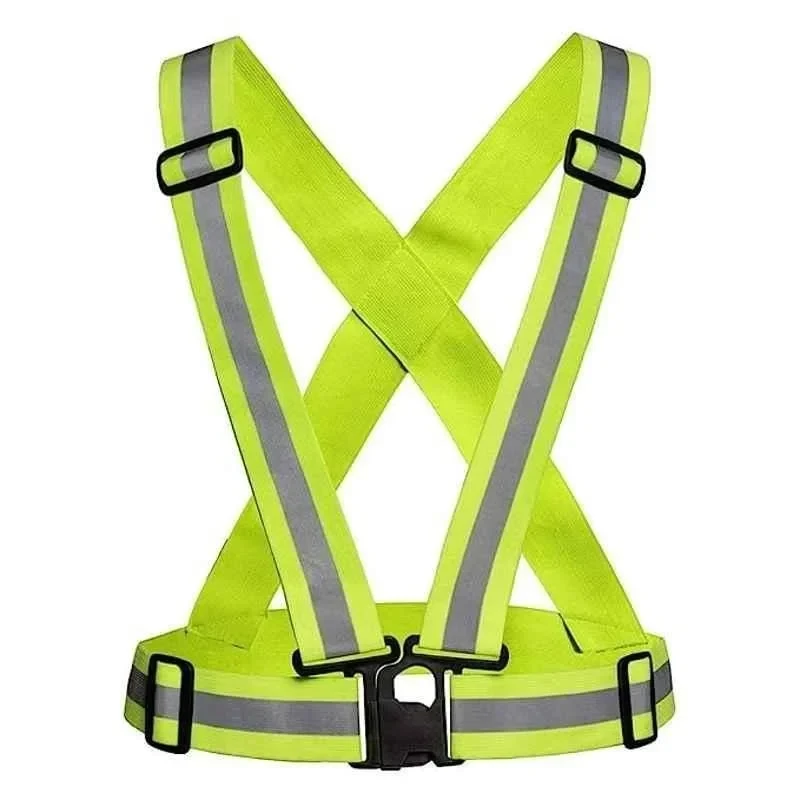
Industrial safety belts for maximum protection are specially...

Reliable safety harness solutions are an important part of w...
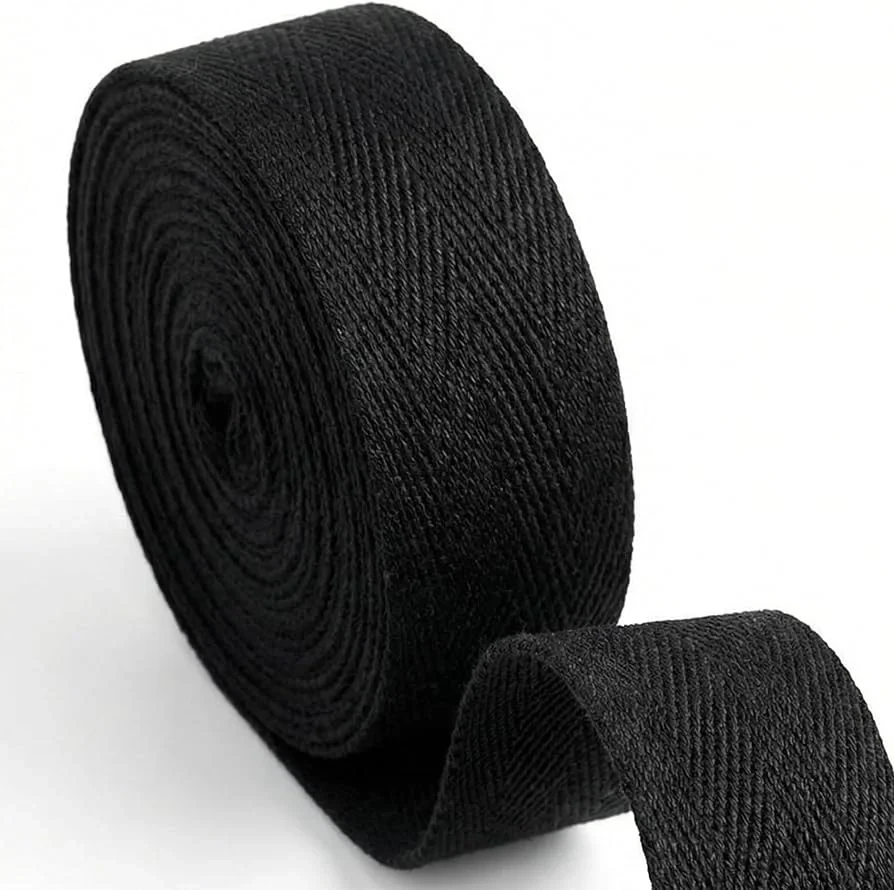
Narrow woven fabric tape manufacturing plays an important ro...
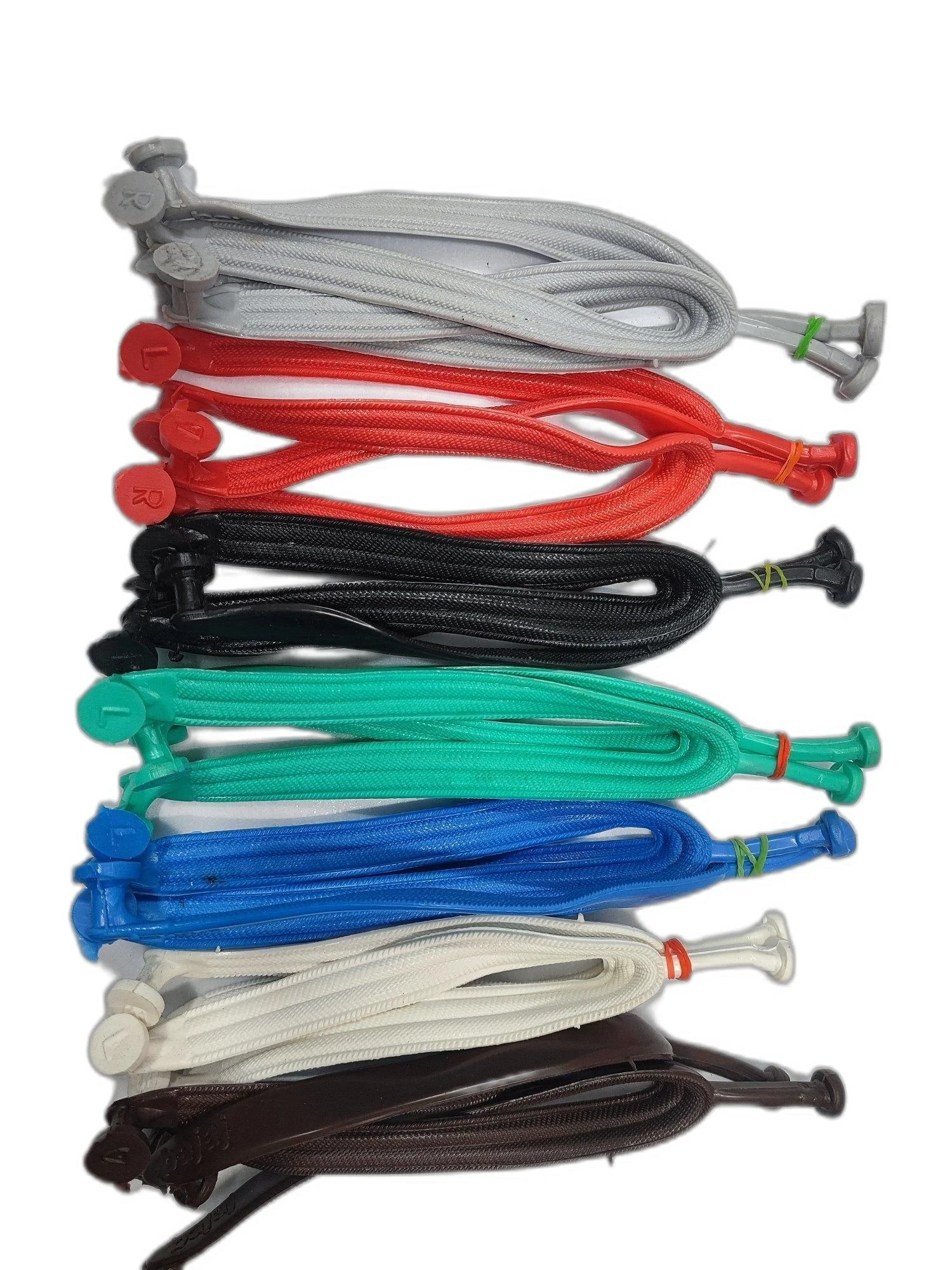
Durable slipper strap manufacturing solutions are essential...

High strength industrial woven tapes are designed for indust...

What Is Industrial Webbing?Industrial webbing is a high-stre...

Nylon vs Polyester vs Polypropylene Webbing: Which One Shoul...

How Is Industrial Webbing Manufactured? A Step-by-Step Guide...

Safety Harness Webbing: Complete Guide to Materials, Strengt...

What Is Seat Belt Webbing? Complete Guide to Automotive Safe...

Bag & Luggage Webbing: Complete Guide to Materials, Type...

Polyester Webbing: Complete Guide to Types, Strength, Uses &...

PP Webbing: Complete Guide to Polypropylene Webbing, Uses, B...
Safety Lanyards: Complete Guide to Types, Materials, Applica...
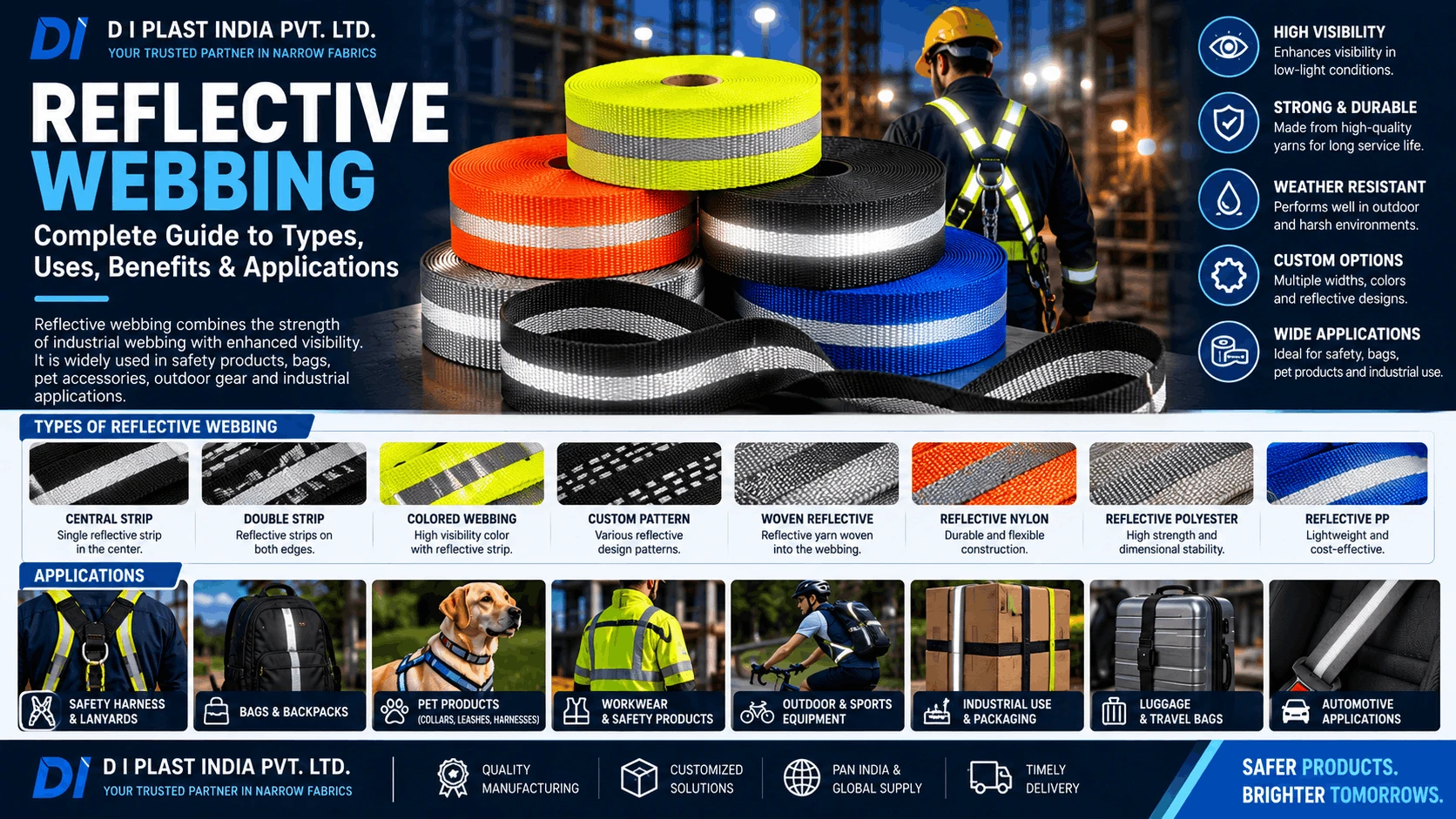
Reflective Webbing: Complete Guide to Types, Uses, Benefits...