Polyester webbing is one of the most versatile narrow woven fabrics used across industrial, automotive, safety, luggage, sports, apparel and outdoor applications.
Manufactured by weaving polyester yarn into a narrow, continuous fabric, polyester webbing can be produced in different widths, thicknesses, colors, constructions and strength levels.
Its combination of strength, durability, low moisture absorption, dimensional stability and resistance to environmental exposure makes it suitable for many applications where ordinary fabric or low-strength straps may not be sufficient.
From seat belt webbing and safety products to bag straps, industrial belts and technical textiles, polyester webbing can be engineered according to the requirements of the finished product.
D I PLAST INDIA manufactures polyester webbing as part of its wider technical-webbing product range and supplies webbing solutions across industries including automotive, safety, defence, footwear, bags and sports.
Polyester webbing is a narrow woven textile made primarily from polyester yarn.
Unlike conventional fabric, which is generally manufactured in wide rolls, webbing is produced in narrow widths and is designed specifically for use as:
Straps
Belts
Reinforcement
Load-bearing components
Handles
Harnesses
Tie-down systems
Safety components
Decorative trims
The final properties of polyester webbing depend on much more than the fiber itself.
Factors such as yarn specification, weave construction, width, thickness, density, finishing and manufacturing control can significantly influence performance.
Polyester is particularly useful for webbing because it offers a balanced combination of mechanical and environmental characteristics.
Some important advantages include:
High-tenacity polyester yarn can be used to manufacture strong webbing for demanding applications.
Polyester has low moisture absorption, making it useful in applications where the webbing may encounter humidity or water.
Polyester generally maintains its dimensions well, helping manufacturers achieve consistent webbing width and construction.
Polyester is commonly selected for applications where resistance to sunlight and outdoor exposure is important.
Webbing is frequently exposed to rubbing and repeated movement. Polyester can provide good resistance to everyday abrasion.
Polyester webbing can be manufactured in a wide range of widths, colors, thicknesses and constructions.
There is no single type of polyester webbing.
The appropriate construction depends on the application.
Standard flat polyester webbing can be used for:
Bags
Luggage
Straps
Handles
General industrial products
Outdoor products
It can be manufactured in different widths and colors according to customer requirements.
High-tenacity polyester webbing is designed for applications where higher mechanical performance is required.
It can be considered for:
Automotive applications
Safety products
Industrial straps
Heavy-duty bags
Technical textiles
Load-bearing applications
The required strength should always be specified together with the appropriate test method.
Automotive restraint systems require specialized webbing.
Seat belt webbing needs to work correctly with components such as retractors, buckles, anchors and other parts of the restraint system.
D I PLAST INDIA lists car seat belt webbing manufactured using high-tenacity polyester as one of its automotive products.
This is a specialized application and should not be confused with ordinary polyester strap webbing.
Polyester is widely suitable for bag and luggage applications.
It can be used for:
Backpack straps
Luggage handles
Shoulder straps
Travel bags
Sports bags
Outdoor bags
Reinforcement straps
The exact width and construction can be selected according to the weight and design of the finished product.
Safety applications require carefully specified webbing.
Depending on the product, polyester webbing may be used in:
Safety harnesses
Lanyards
Industrial safety products
Fall-protection equipment
Technical safety equipment
For safety-critical products, the complete assembly must be evaluated against the applicable standard rather than assuming that generic polyester webbing is suitable.
One major advantage of webbing manufacturing is the ability to produce different widths for different applications.
Common requirements can include narrow webbing for small straps and wider webbing for load-bearing or comfort-oriented applications.
Width selection depends on:
Expected load
Product design
Hardware dimensions
Stitching requirements
User comfort
Appearance
For example, a small adjustment strap may require a relatively narrow webbing, while a shoulder strap may require a wider construction.
Thickness is another important specification.
Two webbings with the same width can have very different thicknesses and constructions.
Thickness can influence:
Flexibility
Stiffness
Appearance
Stitching
Hardware compatibility
Handling characteristics
However, thicker webbing does not automatically mean stronger webbing.
Strength depends on the complete construction, including yarn type, density, weave and manufacturing process.
When purchasing polyester webbing, buyers should not look only at the material.
The following factors can affect strength:
Higher-performance yarn can contribute to higher-strength webbing.
The number and arrangement of yarns influence the final construction.
Different weave constructions can produce different performance characteristics.
Wider webbing can accommodate a different yarn configuration than narrow webbing.
Thickness can contribute to the overall construction but should not be considered independently.
Consistent weaving tension and process control are essential for repeatable results.
Tensile strength is normally expressed as the force required to break a webbing sample under specified test conditions.
It is one of the most commonly requested specifications when purchasing industrial webbing.
However, there is no single tensile strength that applies to all polyester webbing.
For example:
Bag straps require one performance range.
Industrial straps may require another.
Automotive webbing has application-specific requirements.
Safety equipment has its own requirements.
Therefore, a buyer should specify the required tensile strength and test method, rather than simply asking for "strong polyester webbing."
The manufacturing process begins with polyester yarn and progresses through several controlled stages.
The manufacturer selects polyester yarn according to the required specification.
For technical applications, yarn characteristics can be carefully selected according to the required strength and construction.
The yarns are arranged and prepared for weaving.
Consistent tension is important at this stage.
The prepared yarns are woven on narrow-fabric weaving equipment.
The weaving process determines:
Width
Pattern
Density
Thickness
Edge construction
Surface appearance
The webbing can be produced in the required color.
For commercial products, color matching and batch consistency can be important.
Finishing processes can be used to achieve the required surface and handling characteristics.
Finished rolls can be checked for:
Width
Thickness
Length
Appearance
Strength
Finishing
D I PLAST INDIA states that its rolls undergo checks for width, strength, length and finishing before dispatch.
The approved webbing is wound into rolls and packed for transportation.
Polyester webbing is used across a wide range of industries.
Applications can include:
Seat belt webbing
Automotive straps
Restraint-related components
D I PLAST INDIA identifies automobile and aviation among the industries it serves.
Applications include:
Harnesses
Lanyards
Industrial safety products
Technical webbing
Polyester webbing can be used for:
Handles
Shoulder straps
Backpack straps
Luggage straps
Reinforcement
Technical polyester webbing can be considered for selected:
Load-bearing systems
Equipment straps
Technical textile applications
Applications can include:
Sports bags
Outdoor equipment
Straps
Protective equipment
Webbing can be used for:
Straps
Reinforcement
Decorative elements
Footwear components
D I PLAST INDIA lists footwear among its served industries.
One of the most common questions from buyers is whether they should choose polyester or nylon.
Property | Polyester | Nylon |
|---|---|---|
Strength | High | High |
Moisture absorption | Low | Higher |
UV resistance | Very good | Good |
Flexibility | Very good | Excellent |
Stretch | Generally lower | Generally higher |
Abrasion resistance | Very good | Excellent |
Dimensional stability | Excellent | Good |
Typical advantage | Stability & environmental resistance | Flexibility & toughness |
Neither material is automatically better for every application.
The correct choice depends on the requirements of the finished product.
For a more detailed comparison, readers can also refer to your earlier article:
“Nylon vs Polyester vs Polypropylene Webbing: Which One Should You Choose?”
Yes.
One of the major advantages of working directly with a webbing manufacturer is the ability to develop a customized specification.
Depending on the application, customization can include:
Width
Thickness
Color
Tensile strength
Weave construction
Surface finish
Roll length
Packaging
For branded products, additional options can include:
Printed designs
Logos
Jacquard patterns
Custom color combinations
This is particularly useful for manufacturers that need webbing to match an existing product design.
Choosing a supplier based only on price can create problems later.
Instead, buyers should evaluate several factors.
Check whether the supplier actually manufactures the webbing or primarily trades it.
A supplier with multiple webbing constructions may be better positioned to develop customized products.
Ask how width, strength, thickness, color and finishing are controlled.
A supplier should be able to provide samples for evaluation before bulk production.
For repeated orders, batch-to-batch consistency is extremely important.
Check whether the manufacturer can meet your specific width, thickness, color and strength requirements.
For large-volume customers, manufacturing capacity and delivery reliability are important considerations.
When requesting a quotation, provide as much technical information as possible.
Polyester / high-tenacity polyester
Required finished width
Required thickness or physical sample
Color code, Pantone reference or sample
Required tensile strength and test method
For example:
Bag
Automotive
Safety
Industrial
Outdoor
Defence
Monthly or annual requirement
Required length per roll
Such as:
Printing
Jacquard
Special finishing
Heat sealing
Custom packaging
Providing these details allows the manufacturer to recommend a more appropriate construction.
Quality control should begin with the raw material and continue through final packing.
Important checks can include:
The incoming yarn should meet the agreed specification.
The manufacturer should monitor:
Width
Density
Weave
Edge quality
Depending on the application, testing may include:
Tensile strength
Elongation
Width
Thickness
Color
Abrasion
Appearance
Every production roll should be checked before dispatch.
This helps reduce the possibility of inconsistent material reaching the customer's production line.
The lowest price does not necessarily represent the lowest overall production cost.
Poor consistency can lead to material rejection and production problems.
If the supplier does not know the required width, strength, thickness or application, it becomes difficult to provide the correct product.
The webbing must work with the buckles, rings, adjusters or other components used in the final product.
Two products can both be called polyester webbing while having significantly different construction and performance.
A change in webbing construction can affect the finished product.
New material should be evaluated before replacing an established specification.
D I PLAST INDIA Pvt. Ltd. is an industrial-webbing manufacturer and supplier based in Sonipat, Haryana.
Its current product portfolio includes Polyester Webbing, Nylon Webbing, PP Webbing, high-tenacity polyester yarn and several application-specific webbing products.
The company serves multiple industries including:
Automobile
Aviation
Defence
Safety
Footwear
Bags
Sports
Musical instruments
Apparel
The company also states that its production rolls undergo final checks for width, strength, length and finishing before dispatch.
For customers requiring a specific construction, D I PLAST INDIA can work around requirements such as material, width, color, thickness and application.
Polyester webbing is a highly versatile technical textile that can be adapted to a wide range of applications.
Its combination of strength, dimensional stability, low moisture absorption, durability and versatility makes it suitable for everything from bag straps and industrial products to automotive and safety applications.
However, selecting the correct polyester webbing requires more than simply specifying the material.
The buyer should consider:
Yarn specification
Width
Thickness
Weave
Tensile strength
Elongation
Color
Finishing
Application
Testing requirements
For manufacturers purchasing webbing in bulk, consistency is equally important.
A reliable webbing manufacturer should be able to provide repeatable quality, customized specifications, technical support and dependable production.
D I PLAST INDIA provides polyester and other technical webbing solutions for manufacturers across multiple industries.
Polyester webbing is a narrow woven fabric manufactured from polyester yarn and used for straps, belts, harnesses, reinforcement and other technical applications.
Yes. Polyester webbing can be manufactured with high tensile strength, particularly when high-tenacity polyester yarn and suitable weaving constructions are used.
Polyester itself has low moisture absorption, but webbing should not automatically be described as completely waterproof. Water resistance depends on the yarn, construction and any additional treatment.
Neither is universally better. Polyester generally offers lower moisture absorption and good dimensional and environmental stability, while nylon is known for flexibility and toughness.
It is polyester webbing manufactured using high-tenacity yarn designed for applications requiring higher mechanical performance.
Yes. Width, thickness, color, weave construction, strength, roll length and other specifications can be customized depending on the manufacturer's capabilities.
Polyester webbing is used in automotive, safety, industrial, luggage, bags, sports, outdoor, footwear, defence and other technical-textile applications.
The basic process includes yarn selection, warping, weaving, dyeing, finishing, inspection, testing and packing.
Start with the application and define the required width, thickness, tensile strength, color, construction and environmental conditions. Then select a supplier capable of producing the required specification consistently.
D I PLAST INDIA offers polyester webbing and a broad range of customized technical-webbing solutions. Customers can discuss their required material, dimensions, color, strength and application with the company.
D I PLAST INDIA Pvt. Ltd. manufactures polyester webbing and customized narrow woven webbing for industrial, automotive, safety, bag, sports and other applications.
Share your:
Width + Thickness + Color + Tensile Strength + Application + Quantity
with our team to discuss the right webbing specification.

Industrial nylon webbing safety belts are essential safety p...
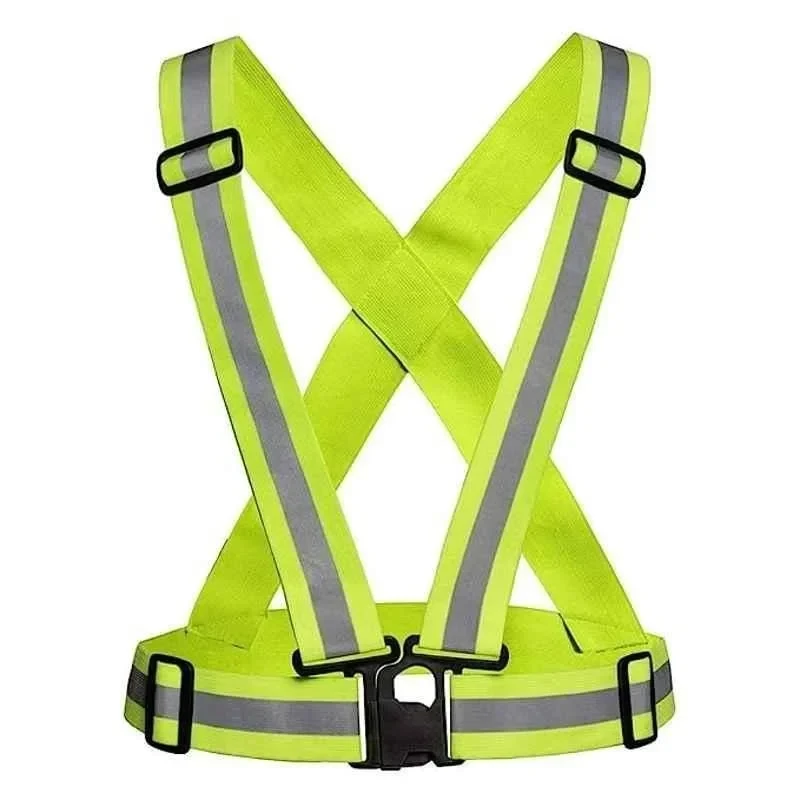
Industrial safety belts for maximum protection are specially...

Reliable safety harness solutions are an important part of w...
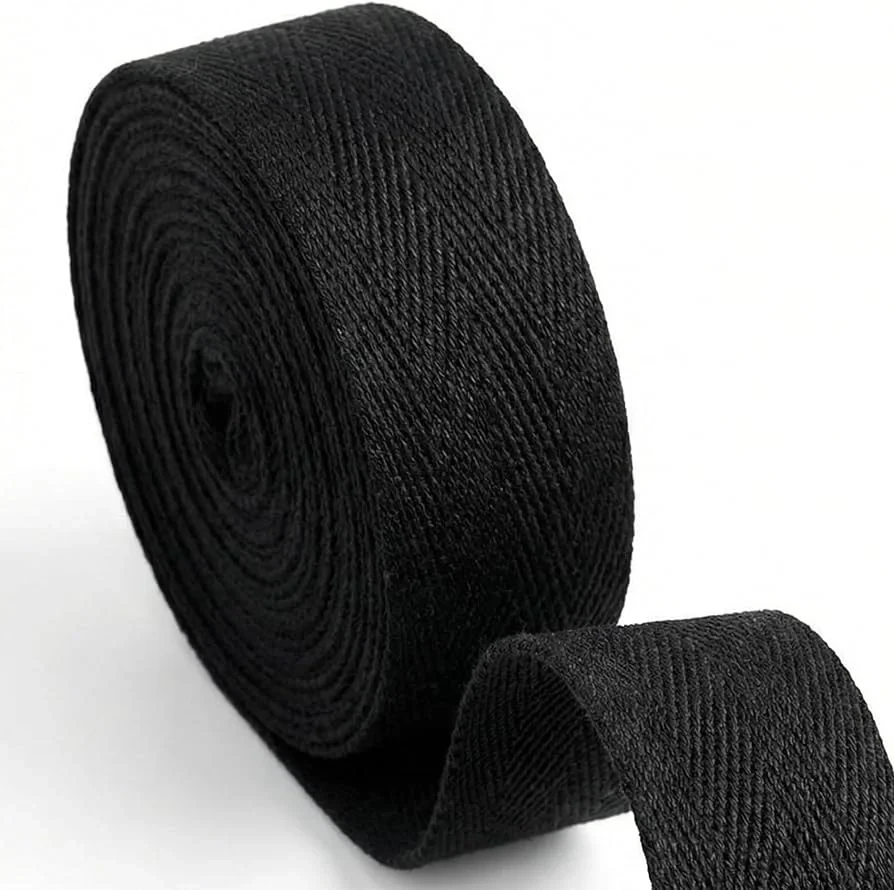
Narrow woven fabric tape manufacturing plays an important ro...
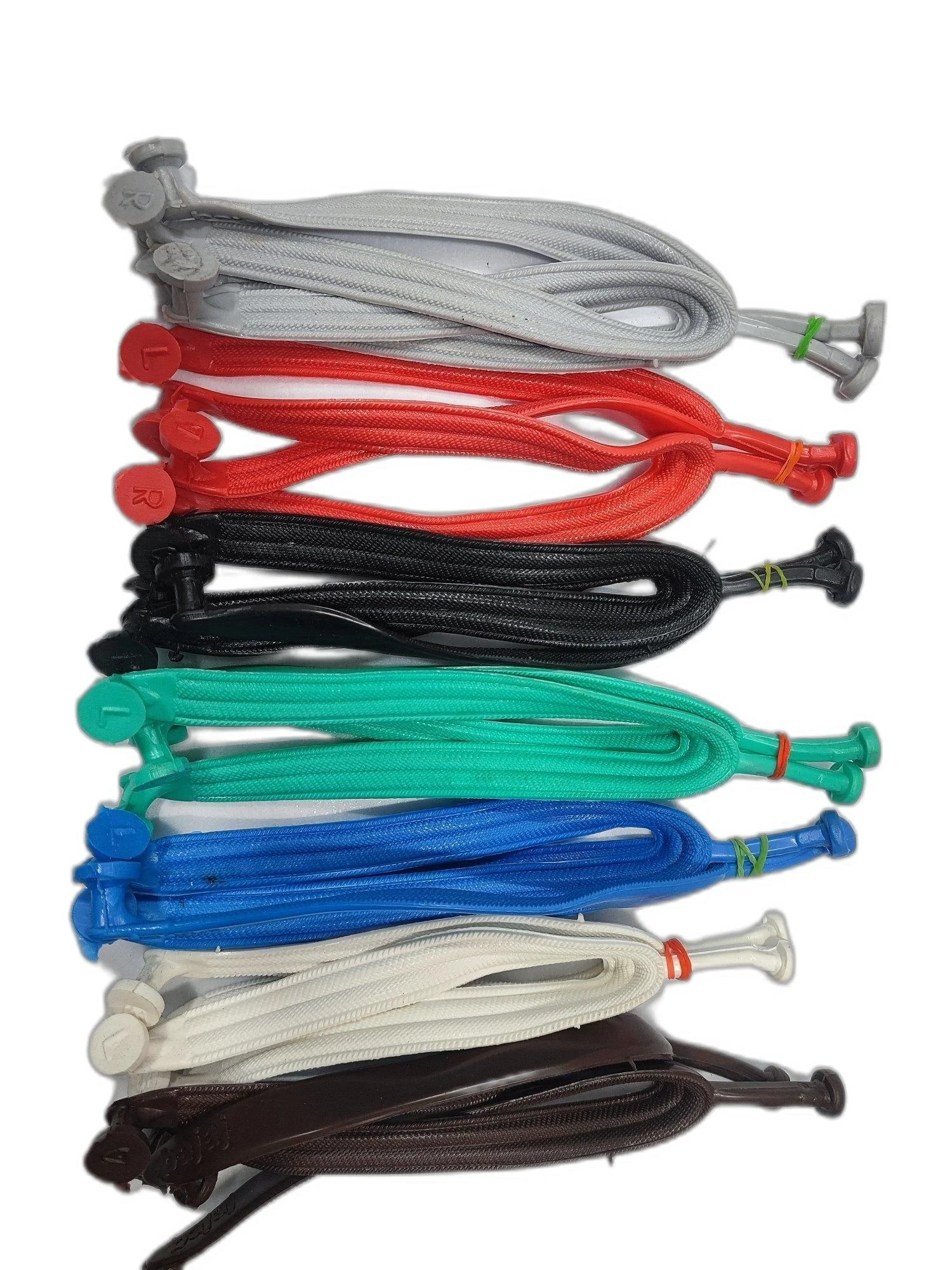
Durable slipper strap manufacturing solutions are essential...

High strength industrial woven tapes are designed for indust...

What Is Industrial Webbing?Industrial webbing is a high-stre...

Nylon vs Polyester vs Polypropylene Webbing: Which One Shoul...

How Is Industrial Webbing Manufactured? A Step-by-Step Guide...

Safety Harness Webbing: Complete Guide to Materials, Strengt...

What Is Seat Belt Webbing? Complete Guide to Automotive Safe...

Bag & Luggage Webbing: Complete Guide to Materials, Type...

Nylon Webbing: Complete Guide to Strength, Types, Uses &...

PP Webbing: Complete Guide to Polypropylene Webbing, Uses, B...
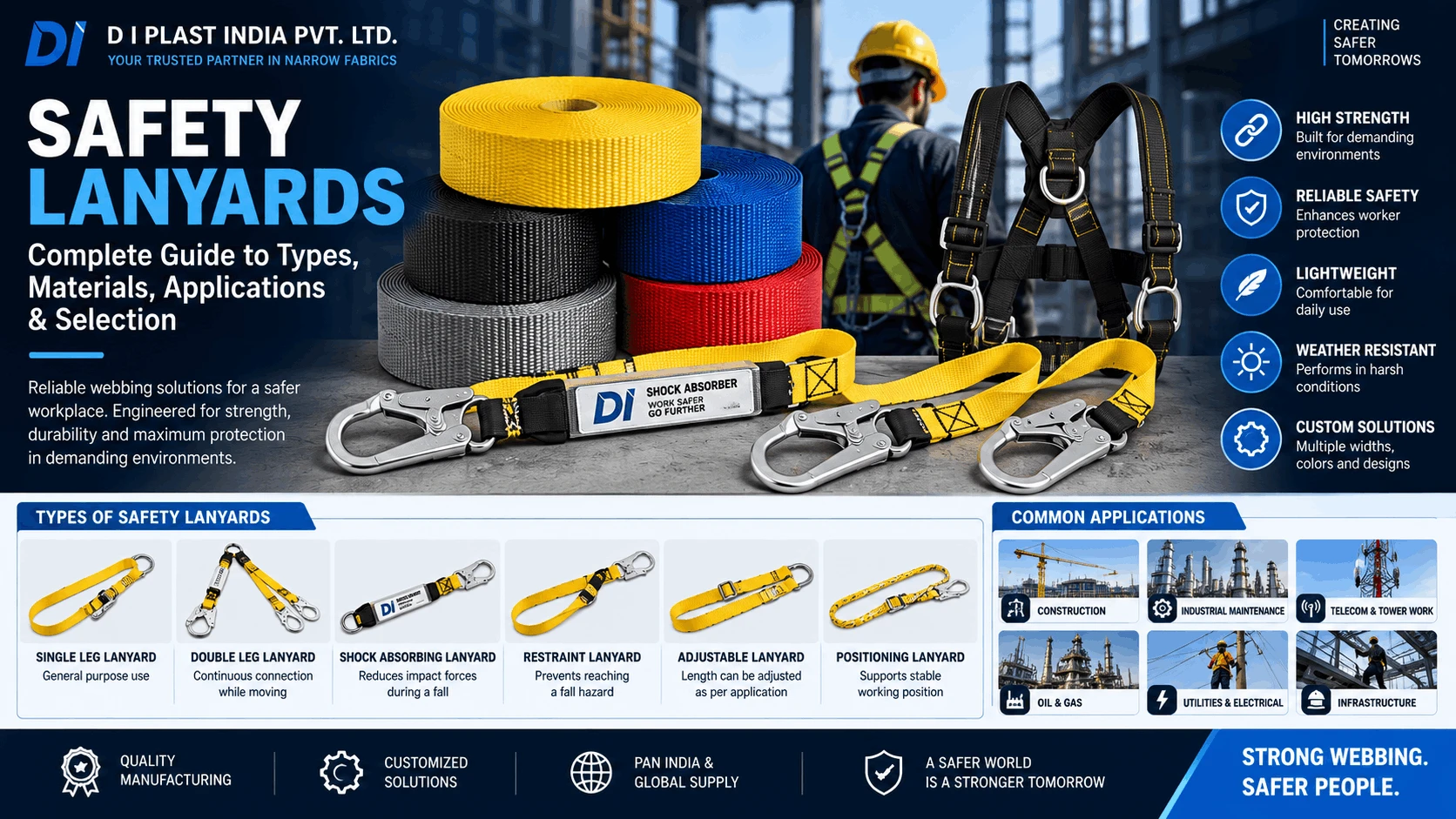
Safety Lanyards: Complete Guide to Types, Materials, Applica...
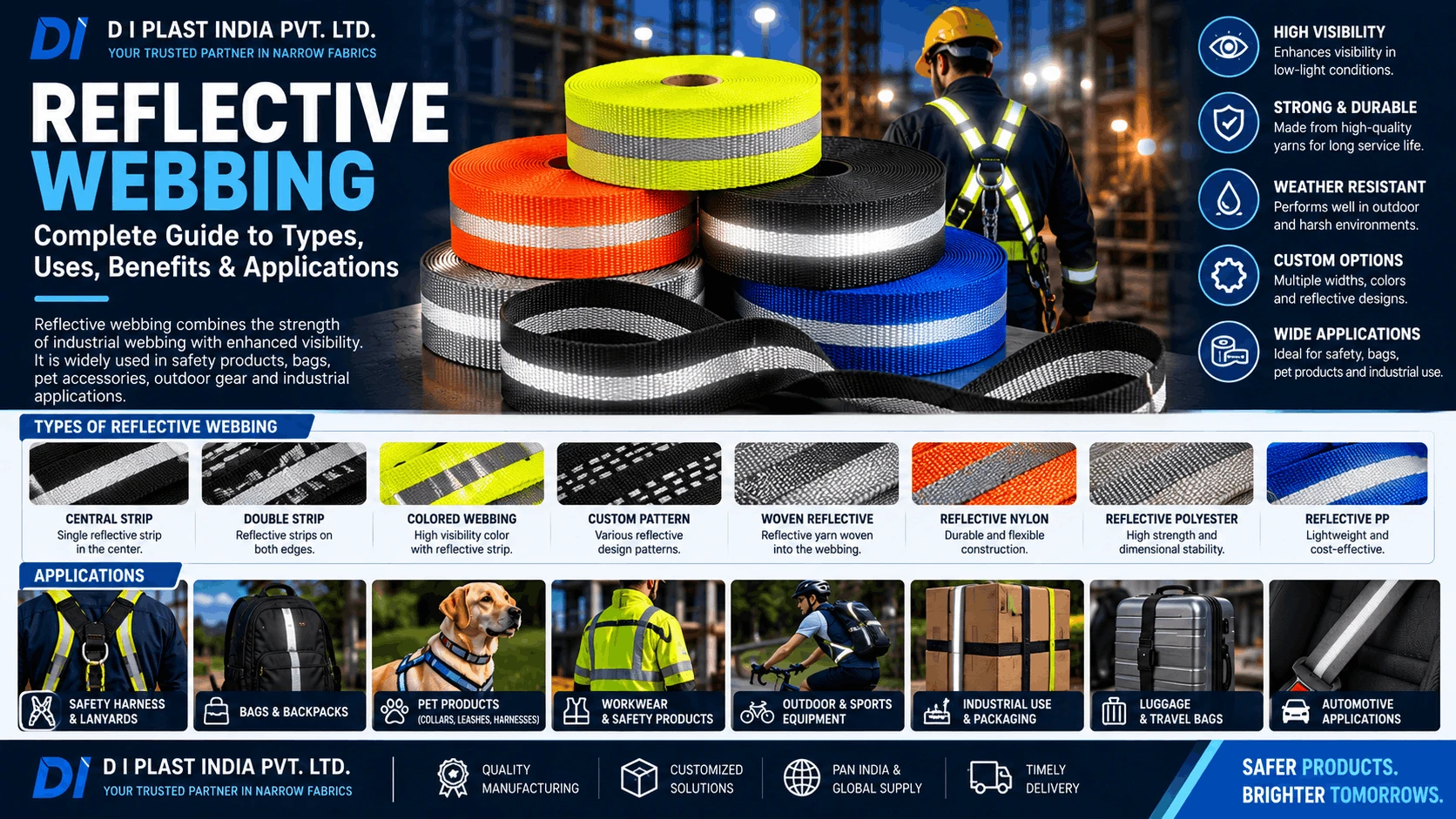
Reflective Webbing: Complete Guide to Types, Uses, Benefits...