Safety harnesses are critical personal protective equipment used to protect workers from falls when working at height. At the center of a full-body harness is a relatively simple-looking component that performs an extremely important function: the webbing.
Safety harness webbing forms the primary structural straps of the harness. It connects different parts of the harness, distributes forces around the user's body, and must maintain its integrity during normal use as well as under demanding loading conditions.
For this reason, safety harness webbing cannot be selected in the same way as ordinary bag straps or general-purpose webbing. Material, construction, tensile strength, elongation, width, abrasion resistance, stitching performance, environmental resistance, and applicable standards all need to be considered.
OSHA specifically identifies webbing used in lanyards, lifelines, and the strength components of body harnesses as a safety-critical component that must be made from synthetic fibers.
In this guide, we explain what safety harness webbing is, which materials are commonly considered, how it is manufactured, what properties buyers should evaluate, and how to select a suitable webbing supplier.
Safety harness webbing is a high-strength woven narrow fabric used as a structural component in full-body harnesses and related fall-protection equipment.
Unlike decorative or general-purpose webbing, safety harness webbing is engineered for demanding applications where failure can have serious consequences.
A typical full-body harness may incorporate webbing around the:
Shoulders
Chest
Waist
Thighs
Back
Legs
The webbing works together with other components such as:
D-rings
Buckles
Connectors
Adjusters
Stitching
Energy absorbers
Lanyards
The webbing should therefore be considered as part of a complete fall-protection system rather than as an isolated strap.
The main purpose of a full-body harness is to provide a controlled connection between a worker and a personal fall-arrest system.
OSHA describes body harnesses as equipment designed to minimize stress forces on the body during a fall while allowing sufficient freedom of movement for work.
The webbing is fundamental to this function.
It must be capable of:
Carrying substantial loads
Maintaining its structure under tension
Withstanding repeated use
Resisting abrasion
Working with stitching and hardware
Maintaining appropriate dimensions
Performing in the intended environment
A harness manufacturer therefore needs to specify the webbing according to the complete product design and applicable requirements.
Several synthetic fibers can be used in technical webbing, but the choice depends on the harness design, required performance, applicable standard, and manufacturing process.
High-tenacity polyester is widely considered for safety and industrial webbing because of its combination of strength, low elongation, dimensional stability, and environmental resistance.
Polyester is particularly attractive where:
Low stretch is desired
UV exposure is expected
Moisture exposure is possible
Dimensional stability is important
Consistent performance is required
It is also widely used in other demanding webbing applications such as automotive and outdoor products.
Nylon is known for its high strength, flexibility, and abrasion resistance.
Its ability to elongate more than polyester can be useful in certain dynamic applications.
Nylon webbing may be selected where:
Flexibility is important
Abrasion resistance is important
Dynamic loading characteristics are required
A softer hand feel is preferred
However, the appropriate material should always be determined according to the harness design and applicable requirements rather than by material properties alone.
The choice between polyester and nylon should be based on the required performance of the finished harness.
Property | Polyester | Nylon |
|---|---|---|
Tensile performance | High | High |
Stretch | Generally lower | Generally higher |
UV resistance | Excellent | Generally lower |
Moisture absorption | Very low | Higher |
Flexibility | Very good | Excellent |
Abrasion resistance | Very good | Excellent |
Dimensional stability | Excellent | Good |
Typical advantage | Low stretch & environmental stability | Flexibility & dynamic performance |
There is no universal rule that one fiber is always better.
The exact webbing construction, yarn specification, weave density, width, thickness, and finishing all influence the final performance.
Tensile strength is one of the most important properties of safety harness webbing.
It indicates the maximum force the webbing can withstand under the specified test conditions before breaking.
However, tensile strength should not be confused with the safe working load of a complete harness.
The finished harness also depends on:
Stitching
Hardware
Webbing configuration
Attachment points
Energy absorption
Harness design
Applicable standard
Therefore, a webbing breaking-strength figure should never be used by itself to determine the safe performance of a complete harness.
Elongation describes how much the webbing stretches when subjected to a specified load.
Different applications may require different elongation characteristics.
Excessive or uncontrolled elongation can affect the behavior of the complete system, while controlled elongation can be relevant to how forces are managed.
The required elongation should therefore be specified according to the applicable harness design and standard.
Safety harnesses are frequently exposed to friction against:
Clothing
Metal hardware
Structures
Concrete
Steel
Equipment
Good abrasion resistance helps maintain the integrity of the webbing during service.
Common harness webbing widths are selected according to the harness design.
Width influences:
Load distribution
Comfort
Stitching
Hardware compatibility
Overall harness construction
The width should be controlled consistently throughout production.
Thickness can influence:
Strength
Flexibility
Stitching
Hardware compatibility
Comfort
Overall product weight
A thicker webbing is not automatically a better webbing. The construction needs to match the intended application.
The edges of harness webbing should be consistent and properly formed.
Poor edge construction can contribute to:
Fraying
Uneven stitching
Poor appearance
Increased wear
Manufacturing difficulties
Consistent edge quality is therefore an important part of webbing manufacturing.
The basic manufacturing process includes several controlled stages.
The manufacturer selects suitable high-performance yarn based on the required specification.
The yarns are arranged and prepared with controlled tension.
The prepared yarns are woven on a narrow-fabric loom to produce the required webbing construction.
The webbing may be dyed according to the required color.
Additional finishing processes may be applied depending on the application.
The finished webbing is inspected for dimensions, appearance, and other specified characteristics.
Samples may undergo tensile testing and other required tests.
Approved webbing is wound into rolls and packed according to customer requirements.
Testing requirements depend on the final application and applicable standard.
Typical evaluations may include:
Tensile strength
Elongation
Width
Thickness
Abrasion resistance
Color fastness
Environmental resistance
Stitching compatibility
For a complete harness, additional testing may be required at the assembly level.
This distinction is important: testing the webbing alone does not certify the complete safety harness.
Different countries and markets use different standards for fall-protection equipment.
One important international reference is ISO 10333-1, which specifies requirements and test methods for full-body harnesses. ISO states that the standard covers requirements relating to full-body harnesses, including testing, instructions for use, marking, packaging, and maintenance.
In the United States, ANSI/ASSP Z359.11-2021 establishes requirements for full-body harnesses covering performance, design, marking, qualification, testing, inspection, use, maintenance, and removal from service.
OSHA's fall-protection requirements also address webbing used in harnesses, lanyards, and lifelines.
Because requirements vary by market and application, manufacturers should identify the exact standard and edition applicable to the finished product before specifying the webbing.
Before purchasing, buyers should request technical information covering:
Is the webbing polyester, nylon, or another synthetic fiber?
What is the nominal and allowable width tolerance?
What is the finished thickness?
What is the tested breaking strength and test method?
What elongation values are specified?
What weave and yarn construction are being used?
Can the manufacturer match the required color?
Which tests are performed on production batches?
Can the supplier identify the production batch and associated test records?
Can the manufacturer provide documentation required for the intended market and application?
Safety equipment manufacturers often purchase webbing repeatedly over long periods.
Consistency between batches is therefore extremely important.
A change in:
Yarn
Density
Thickness
Width
Finishing
Tension
Weave construction
can affect the performance of the finished harness.
A professional manufacturer should have documented production specifications and quality-control procedures to minimize batch-to-batch variation.
Safety-critical products should not be selected solely on price.
A cheaper webbing may have a different construction, yarn specification, or testing profile.
Breaking strength is important, but it is not the only performance characteristic.
Abrasion, elongation, dimensions, stitching behavior, and environmental performance may also matter.
The webbing is only one part of the complete system.
Hardware, stitching, adjustment points, attachment elements, and energy absorbers all influence the final product.
Replacing polyester with nylon or changing yarn construction can alter the performance of the finished harness.
Any material change should be validated before being introduced into production.
Safety harness webbing is used in equipment for industries such as:
Construction
Industrial maintenance
Warehousing
Oil and gas
Telecom
Wind energy
Utilities
Infrastructure
Rope access
Elevated work platforms
Rescue operations
The exact harness design varies according to the work environment and applicable requirements.
Although both products may look similar, their intended applications can be very different.
General industrial webbing may be designed for:
Bags
Luggage
Furniture
Pet products
Packaging
Utility straps
Safety harness webbing is intended for safety-critical applications where performance requirements are much more demanding.
Therefore, general-purpose webbing should not automatically be substituted for certified safety-equipment webbing.
D I PLAST INDIA Pvt. Ltd. manufactures technical narrow fabrics and industrial webbings for applications across safety, automotive, luggage, pet products, defense, outdoor equipment, and other industries.
Our product capabilities include customized webbing in different:
Materials
Widths
Thicknesses
Colors
Weave constructions
Tensile-strength ranges
Finishing options
For safety-related applications, the webbing specification can be developed around the requirements of the finished product and applicable testing requirements.
Customers can share their existing sample, drawing, technical specification, required strength, width, and application details for evaluation.
Safety harness webbing is a highly engineered narrow fabric and one of the most important structural components in a full-body harness.
Selecting the correct material, construction, width, thickness, strength, and finishing is essential for achieving consistent performance.
Polyester and nylon are both important materials in technical webbing, but the correct choice depends on the harness design, environment, applicable standards, and required performance.
Most importantly, the webbing should be treated as part of a complete fall-protection system. Compliance and certification apply to the finished equipment and its intended application, not simply to a generic roll of webbing.
For manufacturers of safety harnesses, working with an experienced technical-webbing supplier can help ensure consistent raw materials, controlled production, testing, and repeatable quality.
Safety harness webbing is a high-strength woven narrow fabric used as a structural component of full-body harnesses and related fall-protection equipment.
Polyester and nylon are commonly used in high-performance technical webbing. The correct material depends on the harness design, applicable standard, environmental conditions, and required performance.
Testing can include tensile strength, elongation, width, thickness, abrasion resistance, color fastness, and other application-specific evaluations.
No. Safety harness webbing is intended for safety-critical applications and must be specified and tested according to the requirements of the finished equipment.
Polyester generally offers lower stretch, strong UV stability, and low moisture absorption, while nylon is known for flexibility and abrasion resistance. The appropriate material depends on the application and applicable requirements.
Yes. Webbing can be manufactured to specified widths, thicknesses, colors, constructions, tensile requirements, and other technical parameters.
A webbing manufacturer can supply and test the webbing according to agreed specifications, but certification of a complete harness depends on the applicable product standard, complete harness design, testing, and certification process.
D I PLAST INDIA Pvt. Ltd. supplies customized technical webbing solutions for safety and industrial applications.
Share your required width, material, tensile strength, application, color, quantity, and applicable standard with our team to discuss your requirement.
Contact D I PLAST INDIA for safety harness webbing samples and customized manufacturing solutions.

Industrial nylon webbing safety belts are essential safety p...
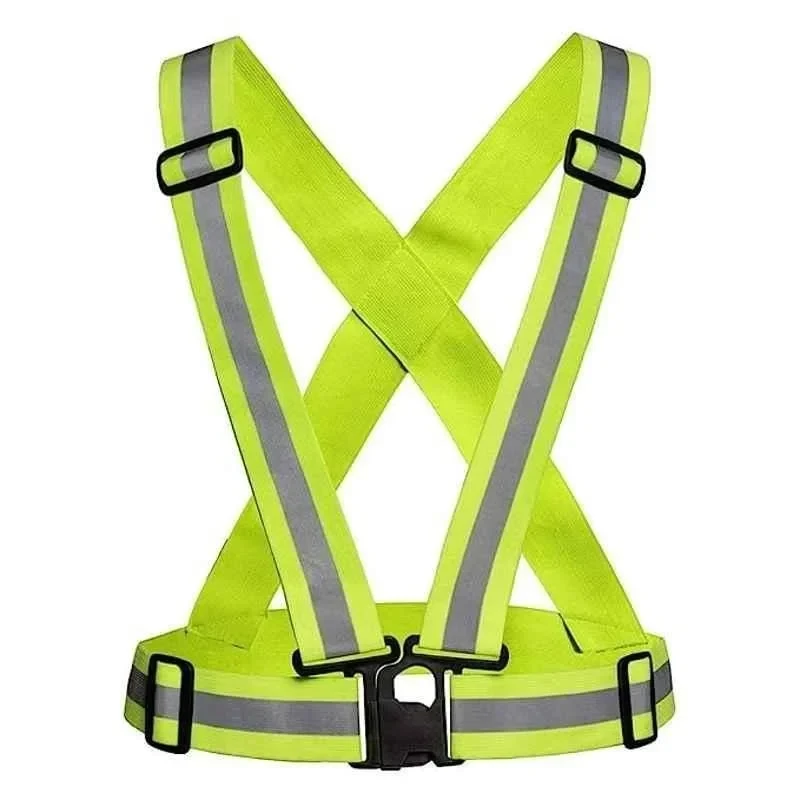
Industrial safety belts for maximum protection are specially...

Reliable safety harness solutions are an important part of w...
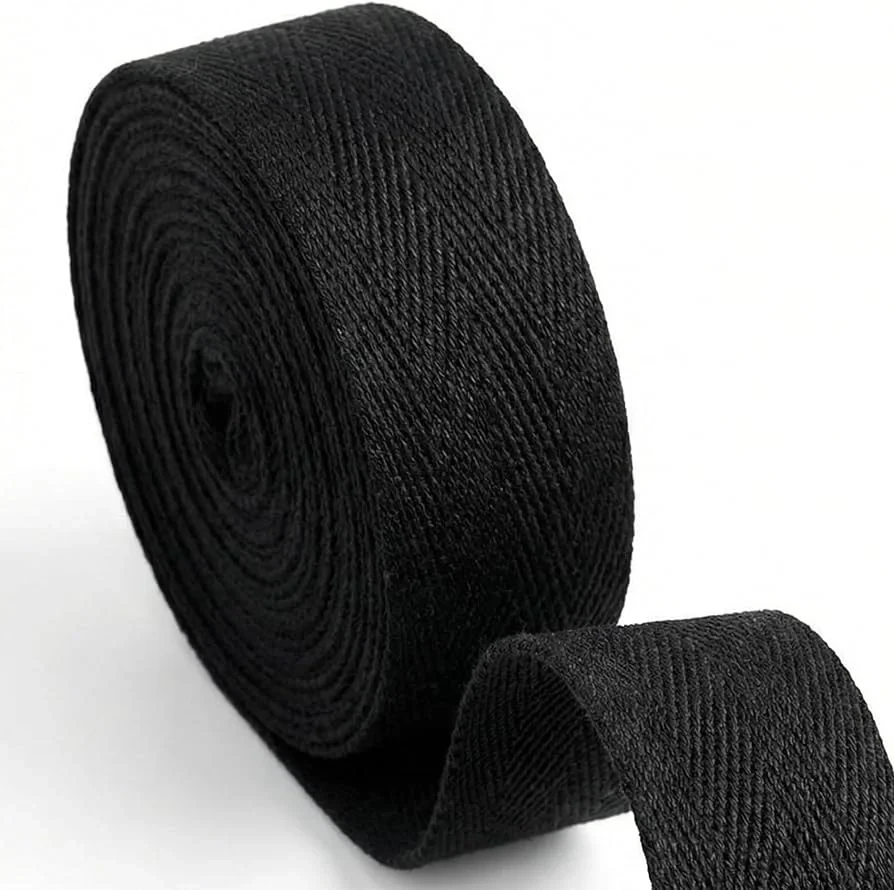
Narrow woven fabric tape manufacturing plays an important ro...
Durable slipper strap manufacturing solutions are essential...

High strength industrial woven tapes are designed for indust...

What Is Industrial Webbing?Industrial webbing is a high-stre...

Nylon vs Polyester vs Polypropylene Webbing: Which One Shoul...

How Is Industrial Webbing Manufactured? A Step-by-Step Guide...

What Is Seat Belt Webbing? Complete Guide to Automotive Safe...

Bag & Luggage Webbing: Complete Guide to Materials, Type...

Polyester Webbing: Complete Guide to Types, Strength, Uses &...

Nylon Webbing: Complete Guide to Strength, Types, Uses &...

PP Webbing: Complete Guide to Polypropylene Webbing, Uses, B...
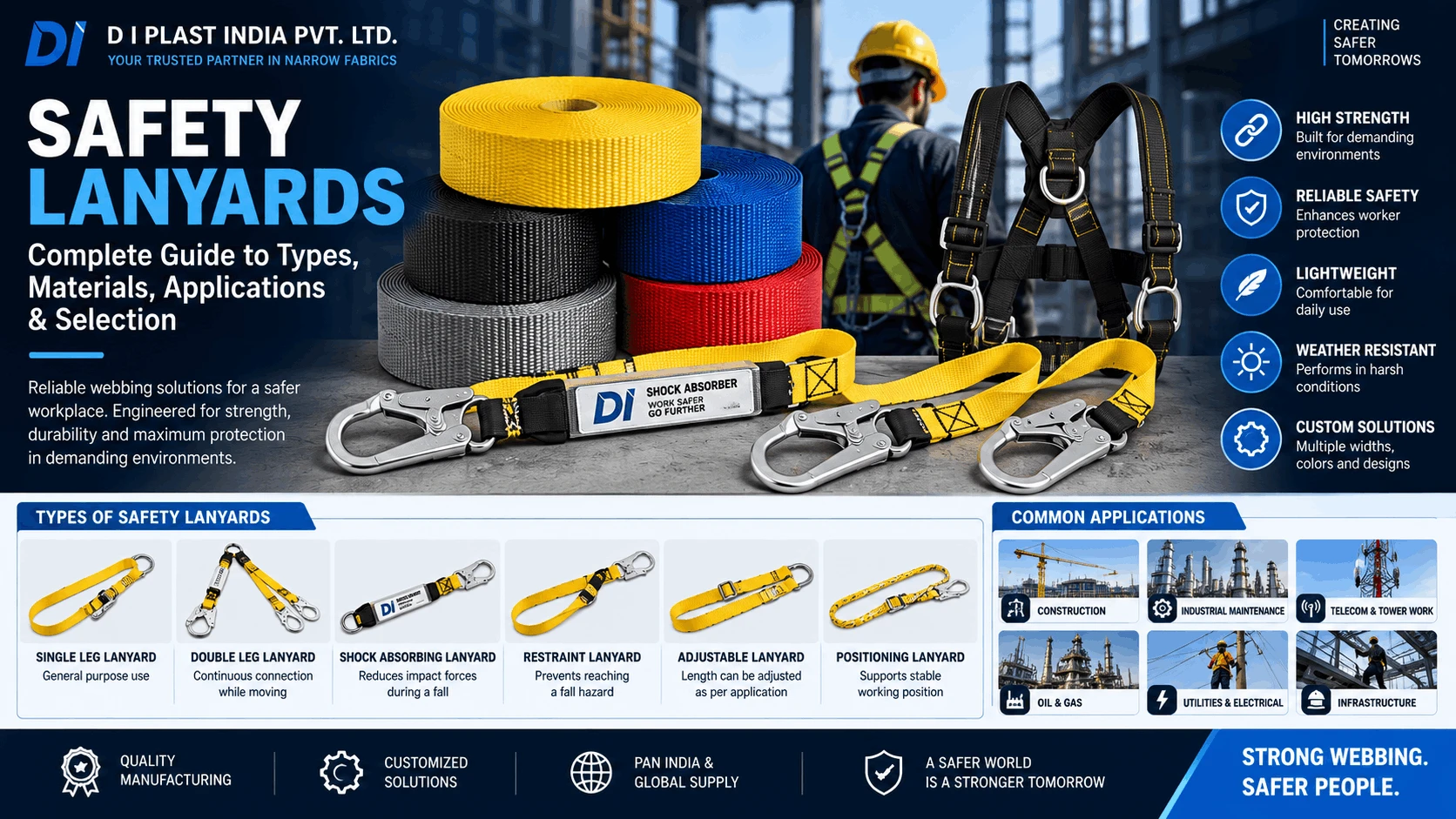
Safety Lanyards: Complete Guide to Types, Materials, Applica...
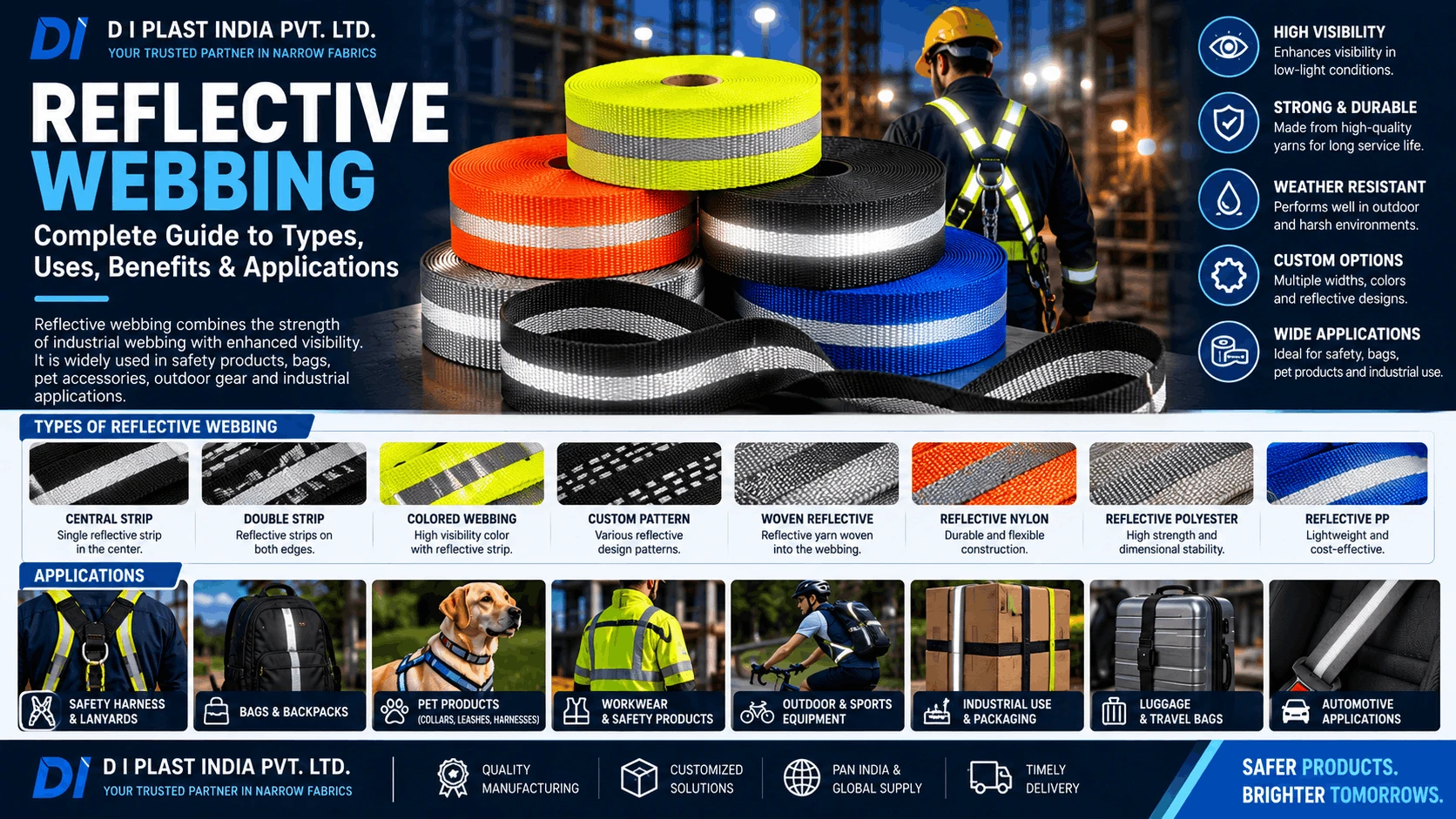
Reflective Webbing: Complete Guide to Types, Uses, Benefits...